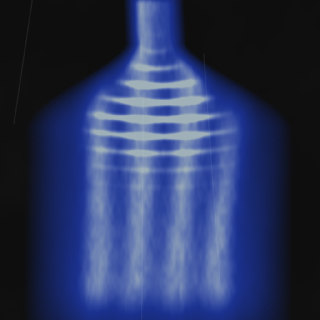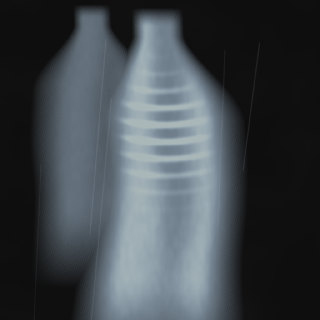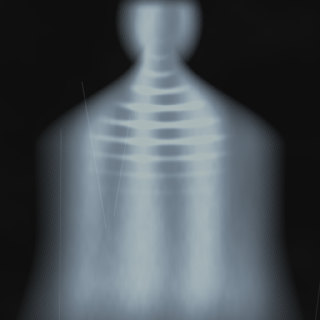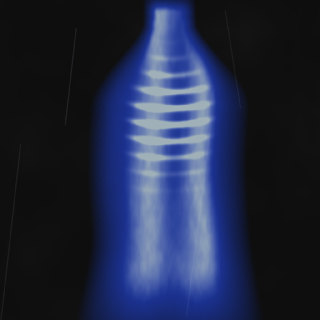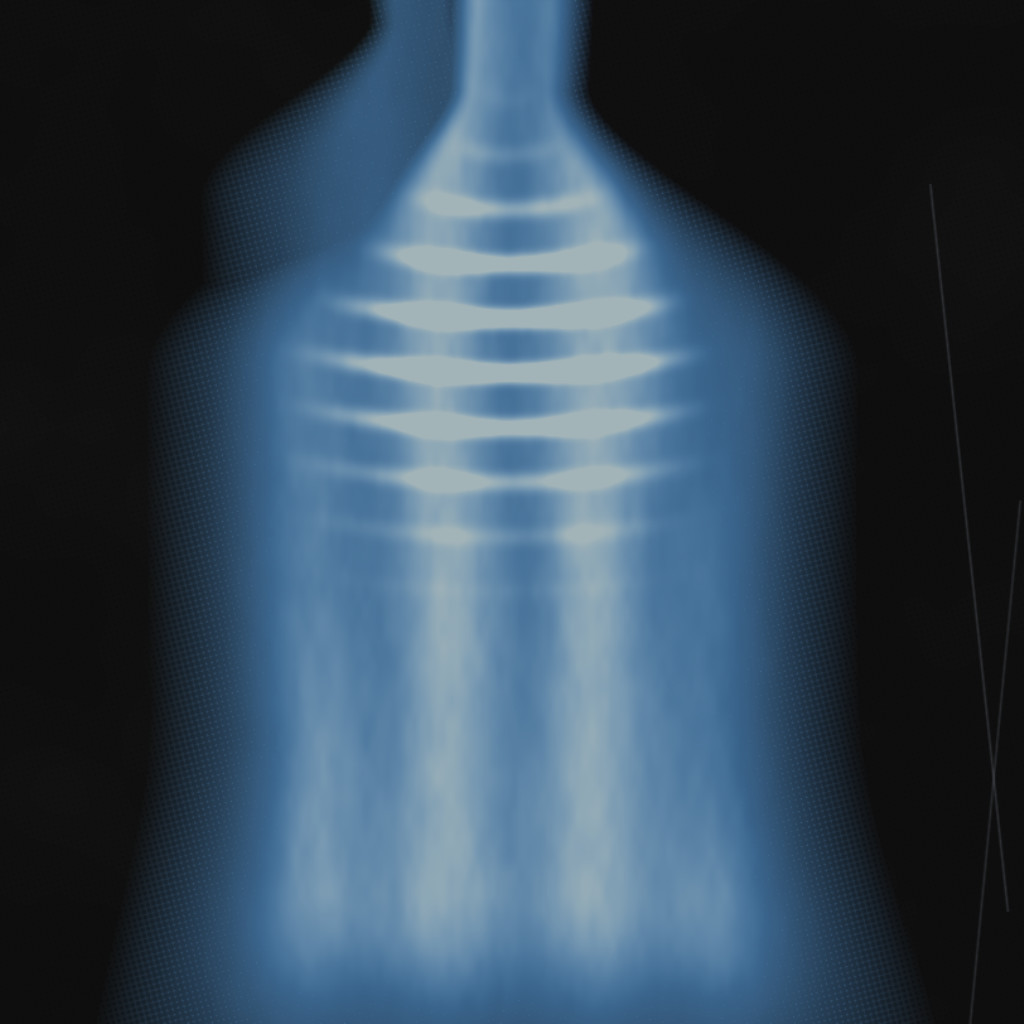
The archive reading. An original interpretation of the source plate, not a reproduction of it.
ENTITY 0019
The Borrowed Lung
Half a set of lungs, drawn with complete confidence. The archive classifies the empty half as the Entity, not as an omission.
- Held by
- not deployed
- On the floor
- not deployed
- Material House
- not deployed
- Chain
- Anvil (local) · not live
Entity Record: original fiction
Written for this project in response to the historical record below. It is not a historical claim and is never presented as one.
The engraver finished one side and stopped. There is no correction, no hatching begun and abandoned, no plate damage: the second lung is simply the colour of the paper, bounded by a line as certain as any other on the sheet. Print historians read this as an unfinished second state. The archive records it as an occupancy. Something is using that cavity, and the engraver drew what was there.
The Borrowed Lung. Partial Occupant of the Interior realm, recorded with a Silver aura and a intermittent signal.
Written from
- The medium and date of the source: Steel engraving, two-colour, 1861
- The historical collection it belongs to: Fluidic Anatomies
- What the plate depicts, as described in the record's alt text
Historical Record
UnverifiedVerifiable information derived from the source. Everything here describes a real object and can be checked against the page it came from. Nothing in it is invented, and nothing in it was inferred from what the picture looks like.
- Source page
- not yet sourced
- Original title
- Thorax, comparative plate, second state
- Artist
- J. Beaumont, after an unnamed demonstrator
- Year
- 1861
- Medium
- Steel engraving, two-colour
- Collection
- Fluidic Anatomies
- Held by
- Wellcome Collection
- Rights
- Public Domain Mark 1.0
- Credit
- Source plate held by Wellcome Collection. Item-level identifier and reproduction rights pending verification.
- Associated article
- not linked
Two-colour steel engraving was expensive and was normally reserved for plates a publisher expected to reprint for a decade. An unfinished plate reaching a bound edition is unusual enough that it is worth stating plainly: the likeliest explanation is a workshop error that nobody caught, and the archive says so on the record rather than only in the field note.
This record has not passed verification. Nobody has yet opened the source page, confirmed that the image, artist, year, collection and institution match it, or confirmed that the digital reproduction, not merely the underlying work, is free of restriction. Its crop has also not been reviewed by a person. It is blocked from mint metadata until that happens. See provenance and rights.
Classification: an ENTITY interpretation
Original fiction. An interpretive vocabulary the archive applies to a historical object. No value below is a finding about the world.
- Realm
- Interior
- Form
- Partial Occupant
- Primary phenomenon
- Substitution
- Anatomical manifestation
- Unfilled Cavity
- Aura
- Silver
- Signal
- Intermittent
- Material affinity
- Health
- Material House
- House of Life
Living Record
Onchain state. It changes; the sections above do not.
Dormant
Filed, and nothing more. The record exists; nobody has been to it.
Contacted
Somebody has been to the source and come back with something.
Named
A true name has been established and attested. It is not necessarily the one on the plate.
Remembered
The record has been corroborated a second time, independently.
Manifested
The Entity has a material life: placed in a House and drawing against it.
The archive is not yet on chain, so the current status cannot be shown. Every record still reads in full.
Published at Dormant. That is the genesis value, not the current one.
Curatorial note
Aura recorded as Spectral in the working notes; normalised to the archive vocabulary on ingest.
Metadata integrity
- Record hash
- 0x53c0b3453b169273e5679b6d54fde3fbf5f40a9cdd91cec0a4d0aabb1366afcc
- Token id
- 19 → content/entities/0019.json
- Plate checksums
- Published for every plate
The record hash is the sha256 of the canonical JSON as published. The Progression contract stores the same hash on every advance, so a holder can prove the text they were shown is the text the chain acknowledged.