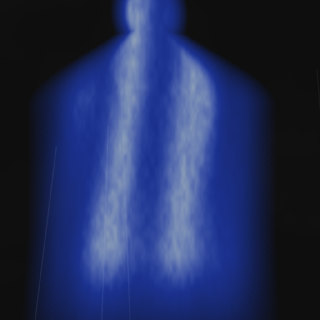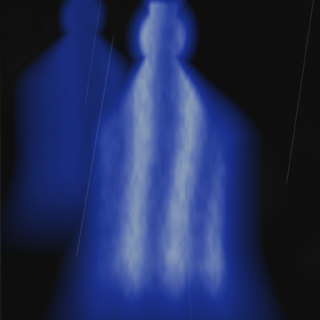
The archive reading. An original interpretation of the source plate, not a reproduction of it.
ENTITY 0577
The Orrery That Kept Going
A demonstration machine engraved with one arm in two places, and a catalogue that never corrected it.
- Held by
- not deployed
- On the floor
- not deployed
- Material House
- not deployed
- Chain
- Anvil (local) · not live
Entity Record: original fiction
Written for this project in response to the historical record below. It is not a historical claim and is never presented as one.
Engravers do not draw motion. They had no convention for it in 1812 and no commercial reason to invent one for a trade catalogue, where the job is to show the object clearly enough to sell it. This plate shows the third arm twice, twenty degrees apart, both fully rendered. The catalogue ran for nine years and eleven printings, and the plate was never recut. Whatever the engraver saw, the publisher was content for buyers to see it too.
The Orrery That Kept Going. Perpetual Mechanism of the Circuit realm, recorded with a Amber aura and a insistent signal.
Written from
- The medium and date of the source: Copperplate engraving, trade catalogue, 1812
- The historical collection it belongs to: Apparatus and Instrument Records
- What the plate depicts, as described in the record's alt text
Historical Record
UnverifiedVerifiable information derived from the source. Everything here describes a real object and can be checked against the page it came from. Nothing in it is invented, and nothing in it was inferred from what the picture looks like.
- Source page
- not yet sourced
- Original title
- A new and improved orrery, as exhibited
- Artist
- T. Whitcombe, engraver
- Year
- 1812
- Medium
- Copperplate engraving, trade catalogue
- Collection
- Apparatus and Instrument Records
- Held by
- Getty Research Institute
- Rights
- Getty Open Content
- Credit
- Comparable items available under the Getty Open Content Program. Item-level identifier and open-content status pending verification.
- Associated article
- not linked
Table orreries were luxury educational instruments and their catalogues were aspirational objects in their own right. Plate recutting was a real cost, which is the standard argument for why an error survives eleven printings, and the archive records it as the likeliest explanation.
This record has not passed verification. Nobody has yet opened the source page, confirmed that the image, artist, year, collection and institution match it, or confirmed that the digital reproduction, not merely the underlying work, is free of restriction. Its crop has also not been reviewed by a person. It is blocked from mint metadata until that happens. See provenance and rights.
Classification: an ENTITY interpretation
Original fiction. An interpretive vocabulary the archive applies to a historical object. No value below is a finding about the world.
- Realm
- Circuit
- Primary phenomenon
- Continuation
- Aura
- Amber
- Signal
- Insistent
- Material affinity
- Industry
- Material House
- House of Motion
Living Record
Onchain state. It changes; the sections above do not.
Dormant
Filed, and nothing more. The record exists; nobody has been to it.
Contacted
Somebody has been to the source and come back with something.
Named
A true name has been established and attested. It is not necessarily the one on the plate.
Remembered
The record has been corroborated a second time, independently.
Manifested
The Entity has a material life: placed in a House and drawing against it.
The archive is not yet on chain, so the current status cannot be shown. Every record still reads in full.
Published at Dormant. That is the genesis value, not the current one.
Curatorial note
Classified Circuit rather than Firmament. The subject is the mechanism, not the sky it represents.
Metadata integrity
- Record hash
- 0x38daa3faf1cc8da1cc2d83f860338ac5883e5173c5a47f04daf06c0d26b5b2b6
- Token id
- 577 → content/entities/0577.json
- Plate checksums
- Published for every plate
The record hash is the sha256 of the canonical JSON as published. The Progression contract stores the same hash on every advance, so a holder can prove the text they were shown is the text the chain acknowledged.